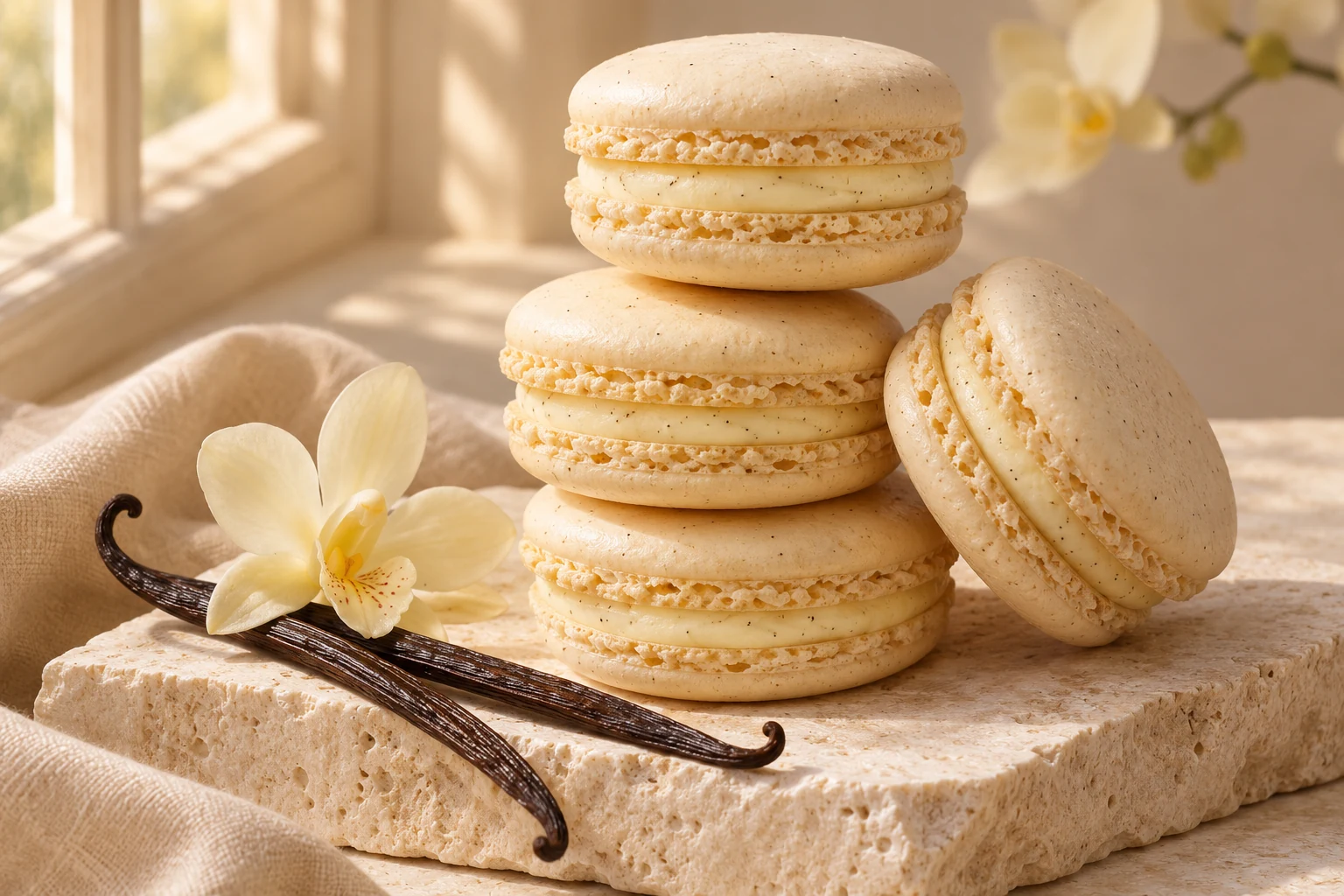
Vanilla starts with an orchid
The spice we call a vanilla bean is the cured fruit of a climbing orchid. Vanilla planifolia, one of the main species grown for vanilla, is native to Mexico and Central America. The fresh fruit is a long green pod filled with tiny seeds.
Each flower opens for only a short time, so growers have a narrow window to pollinate it. In 1841 on Réunion, Edmond Albius, a 12-year-old enslaved boy, devised a practical hand-pollination technique. His method made commercial cultivation possible in places far from the plant’s native range, and growers still use it today.
How a green pod gets its aroma
After pollination, the pod takes months to mature on the vine. Once harvested, it goes through curing. Methods vary by producer, but they typically involve heating or wilting the pods, letting them sweat, drying them gradually, and conditioning them so their aroma can develop.
Vanillin supplies much of the familiar sweet scent. Other aromatic compounds contribute floral, woody, or fruity notes, which vary with the orchid species, growing conditions, and curing method. The hand pollination, months on the vine, and careful curing all help explain the price of whole vanilla beans.
Whole beans, extract, and paste
Pastry cooks choose a form based on how the vanilla will be used and how they want the finished filling to look.
- Whole vanilla bean
- Split the pod and scrape out its fragrant seeds. Both the seeds and scraped pod can infuse cream for a ganache or custard.
- Pure vanilla extract
- Vanilla’s soluble flavor compounds are drawn into an alcohol-and-water mixture. Extract blends easily into buttercream and batter.
- Vanilla bean paste
- A spoonable preparation that often includes vanilla seeds. It disperses easily in a filling and can leave visible flecks.
- Vanilla powder
- A dry option for recipes where extra liquid matters. Some powders use ground pods, while others contain vanilla extract and a carrier. Check the ingredient list.
What makes a vanilla French macaron?
A French macaron has two almond-meringue shells around a soft filling. The shells are traditionally made with almond flour, sugar, and egg whites. Look closely and you’ll see a smooth top and a ruffled edge around the base of each shell. Bakers call that edge the foot.
To make the shells, bakers whip the egg whites into a meringue, then fold in the almond flour and sugar mixture. That folding step, called macaronage, gives the batter enough flow to settle into smooth rounds after piping. Once baked and cooled, the shells are paired and filled.
Vanilla often comes through most clearly in the filling. In buttercream it has a soft, buttery backdrop, while white chocolate ganache brings a denser, silkier texture. As filled macarons rest, a little moisture moves from the filling into the shells, softening their centers. A bite should start with a delicate crack and finish with a slight chew and a creamy center.
If you’re choosing between a macaron and a coconut macaroon, look at the shape. The French macaron is a round sandwich cookie. A coconut macaroon is typically a textured mound of shredded coconut.
How to taste and pair vanilla macarons
Try a vanilla macaron on its own first. Notice the almond in the shell and how the vanilla lingers after the bite. A cup of unsweetened black tea gives the floral notes room to come through, while espresso brings a roasted bitterness that balances the sweetness.
For a side-by-side tasting, pair a classic vanilla macaron with strawberry for a bright fruit note, blueberry for a deeper berry flavor, or red velvet for mild cocoa. An all-vanilla gift box lets everyone share the same flavor. A paired box gives guests two flavors to try together.